Pachinko - Min Jin Lee
- June 8, 2026
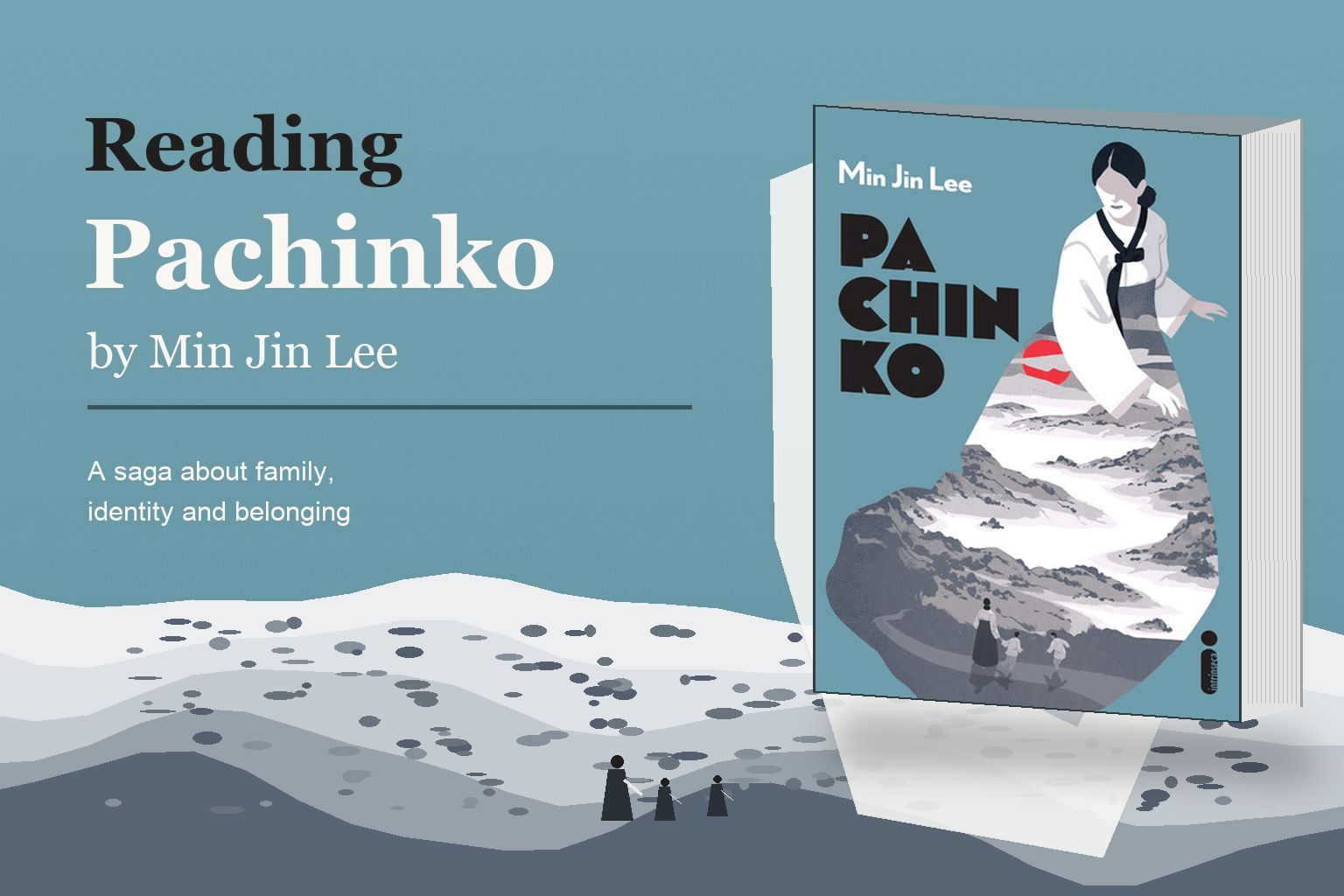
I finished Pachinko by Min Jin Lee and I can say it is a huge story, very good, full of historical and emotional weight, but in the end it feels like it simply ends. It is not that the ending is bad, but it left me waiting for a bigger closure, some stronger conclusion after so many pages following that family.
The book starts very well, mainly with Sunja and the first generation of the family. For me this is where the book has more strength. Her life, the difficult choices, the weight of family, the relation with shame, survival and sacrifice, all this is built in a very human way.
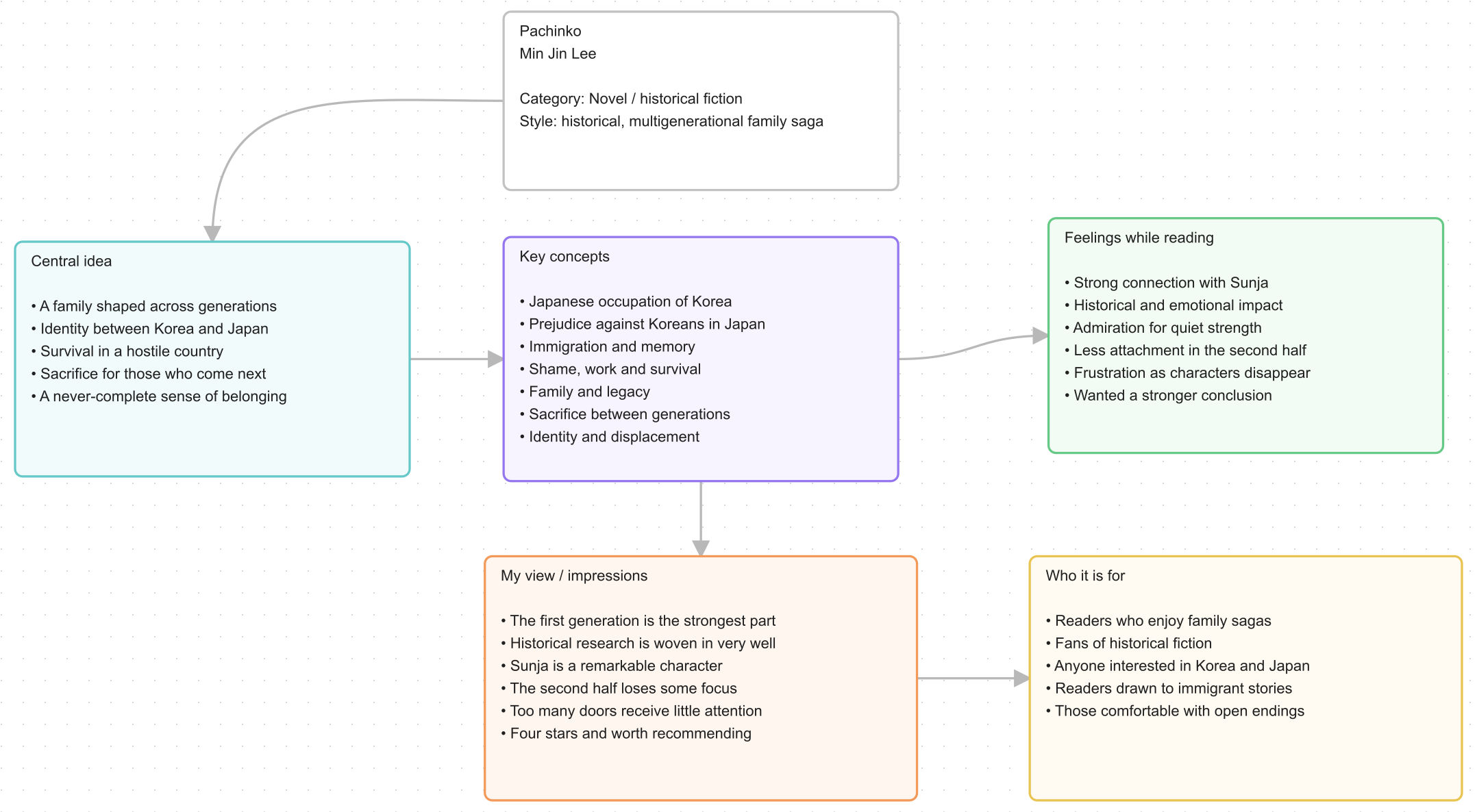
One of the strongest parts of the book is the historical reconstruction of the relation between Korea and Japan. I confess that I knew very little about this period and I was learning together with the reading. The Japanese occupation, the prejudice against Koreans, the difficulty to build a life in Japan without ever being seen as a real Japanese, all this appears in a very concrete way. It does not feel like history class, but at the same time it teaches a lot.
I also liked very much the portrait of Korean immigrants in Japan. The book shows very well this uncomfortable place of not belonging completely to anywhere. They carry Korea in the memory, in the food, in the family, in the way of living, but they need to survive in a country that treats them as inferior.
Sunja is a remarkable character because she does not need to be grand to be strong. Her strength appears in small choices, in work, in silence, in the attempt to keep everyone standing. She represents a lot this idea of sacrifice that crosses the whole book, of one generation paying a very high price so the next one can have some chance, even if this chance never comes clean, never comes easy. This is the portrait of many families.
The story develops very well, but at the same time, I think the second half loses a bit of focus. As the family grows and the book jumps between generations, some characters pass too fast. Some people appear giving the impression of protagonism but later kind of disappear, without a clear closure. This makes harder to create the same attachment that we create in the beginning, with Sunja and the first characters.
This maybe was my biggest difficulty with Pachinko. The first part is so engaging that the expectation becomes very high. After, when the narrative spreads between sons, grandchildren, new conflicts and new times, it continues interesting, but less intense. There are still good moments, but the feeling is that the book opens many doors and not all of them receive the same attention.
I consider it a 4 stars book, it has a very good plot, well developed, historical research and emotional impact, but it could have been even better with more development of the characters from the second half and a more conclusive ending. I noticed that books that do not have a clear ending leave me with a feeling of frustration. Even so, it is a reading that is worth it, I recommend!