Reading 2075 - Monica Magalhaes
- October 10, 2026
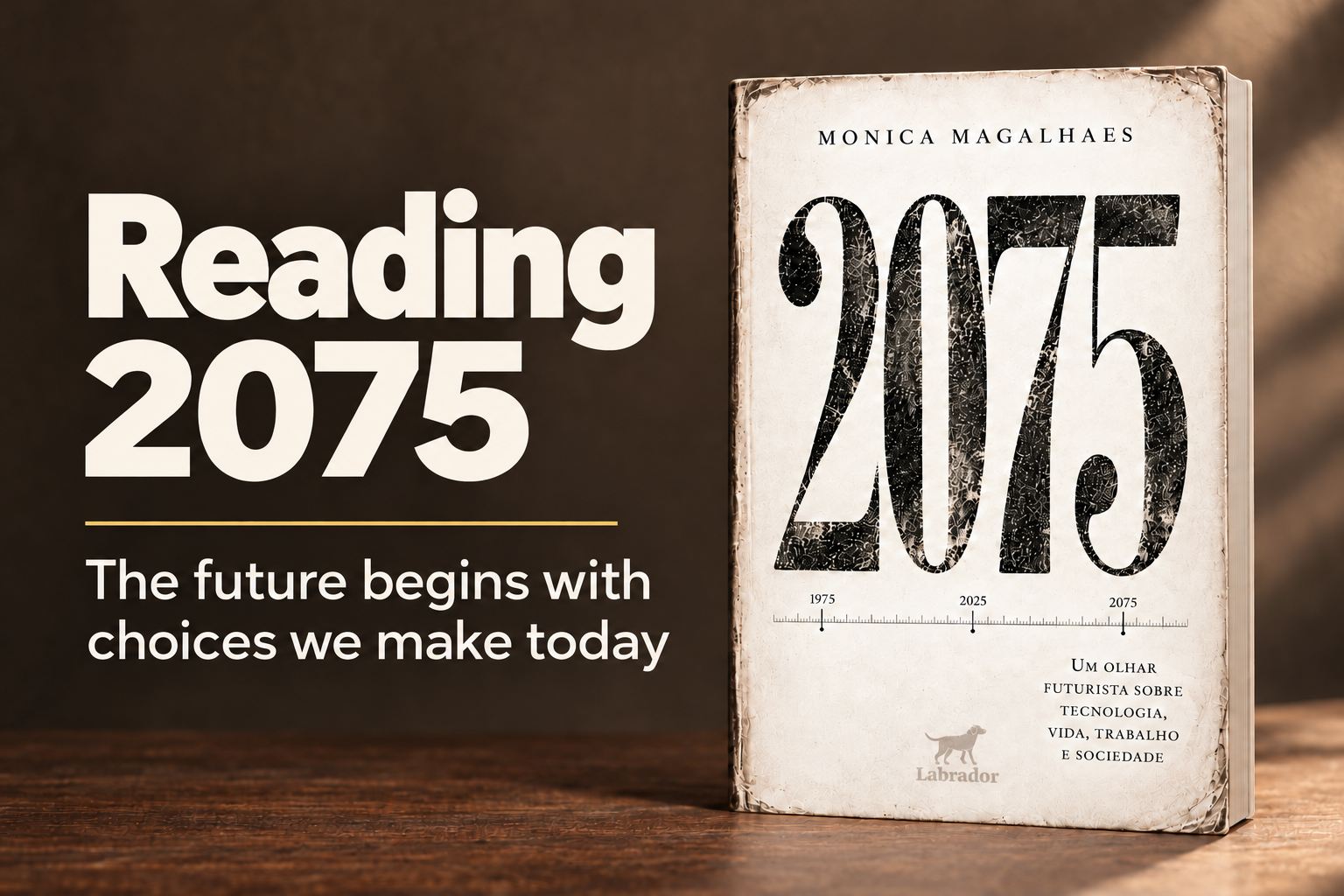
I finished reading 2075 by Monica Magalhaes. This subject could easily turn into a lot of predictions and technical words, but the book is easy to follow. She talks about a huge topic without making the reader feel lost.
The title may make you think the book will tell us what the world will look like in 50 years, but that is not really it. Many times I found myself thinking less about 2075 and more about what we do today, what we did in the past, and how hard it is to leave behind ideas that feel normal just because we have always lived with them.
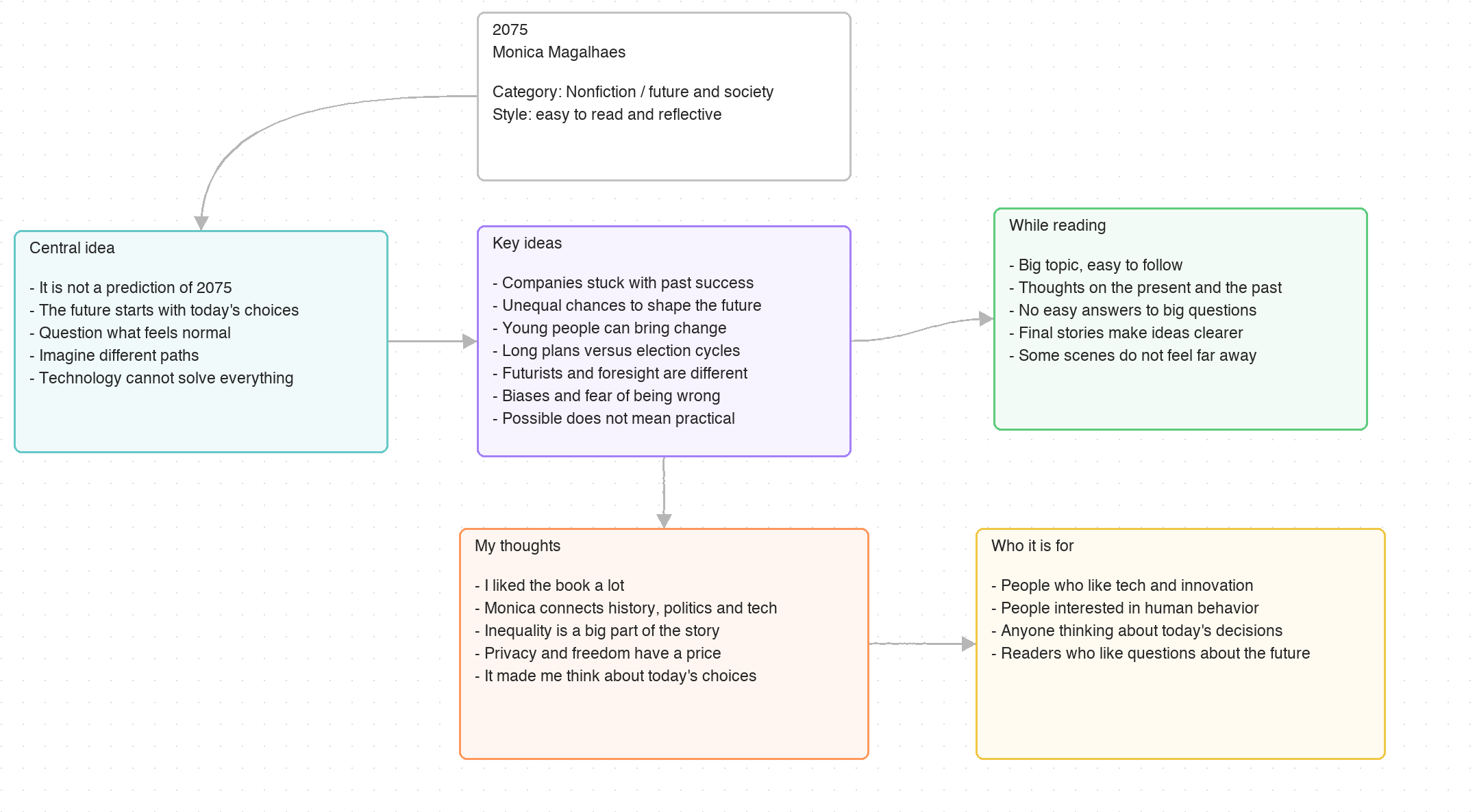
I liked the part about companies. Many of them are very good at keeping the things that already work. Of course that makes sense. The problem comes when the same structure makes any change difficult. What brought success in the past can become a weight later, and it is not always easy to see this while things are still going well.
I also liked the discussion about inequality. It is easy to say we need to prepare for the future when we have time and money for that. But what about someone who is just trying to pay the bills at the end of the month? What about countries that still need to solve basic problems? I kept thinking about this while reading. The future comes for everyone, but we don’t all have the same chance to take part in it.
The book talks about younger generations too. They are often the first ones to question things that older people already see as normal. It also shows how some countries can plan many years ahead, while others are always dealing with the next urgent problem. The part about the time cost of democracy caught my attention. A government needs to show results in a few years, but there is a lot of things that only happen after decades of work. How do you convince people to wait? And how can you be sure the next government will continue the work?
I learned a difference I did not understand very well before: futurists and people who work with foresight do not do exactly the same thing. Imagining what might happen is one thing. Using possible futures to make better decisions now is another. And just because a technology is possible does not mean people will want it, be able to use it, or accept it.
The book also talks about our own biases. Sometimes the people who know the most about a subject have the hardest time imagining something outside what they already know. We hold on to familiar ideas, we are afraid of being wrong, and before we notice it, we have already rejected a different possibility.
Near the end, Monica shows what life could be like for some people in 2075. I liked these stories because they make the earlier discussions easier to picture. Technology helps with almost everything, life looks more comfortable, but there are also many questions about privacy, surveillance, and control. How much freedom would we give away for more convenience? The strange part is that some of these situations do not feel very far away.
This week I was talking with friends about how much of our life we already give to AI. We even talked about connecting Claude to a bank through MCP to get financial insights. It sounds useful, but it also made me think again about the questions in the book.
I finished 2075 without knowing what the future will look like, obviously. But the book gave me ideas to think about and reminded me that what we choose now will shape what comes next. I recommend it to people who like technology and innovation, but mainly to anyone who likes to ask why we keep doing things the way we do.