Memoirs of a Survivor - Luiz Alberto Mendes
- September 7, 2026
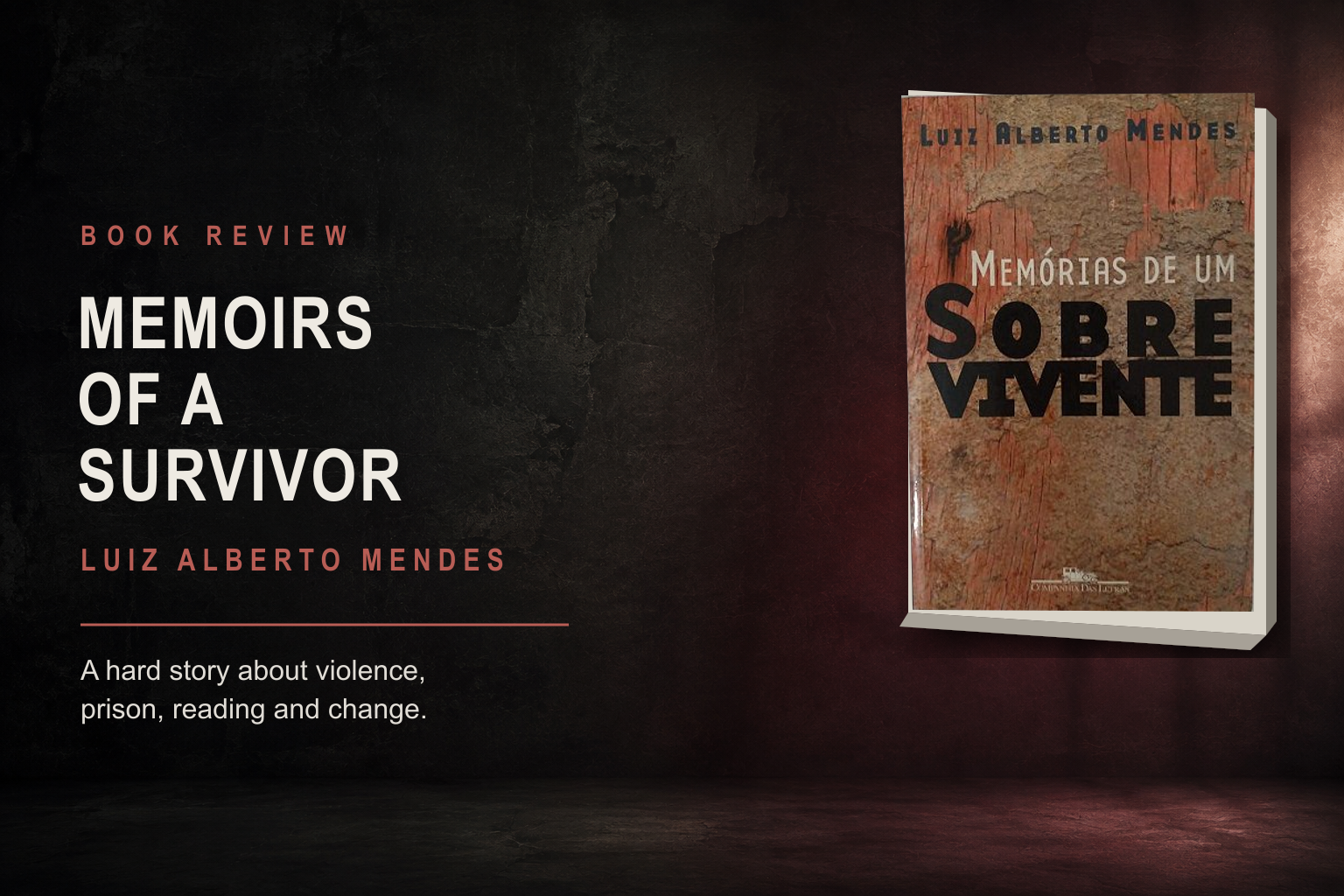
I just finished reading Memoirs of a Survivor, by Luiz Alberto Mendes. What a fantastic book.
I already read many things about prison and I really like the subject. Carandiru Station, by Drauzio Varella, is a book that marked me a lot, but even so it is impossible not to be shocked by the reality of the facts told by Luiz Alberto Mendes. There is violence, pain and a life that seems to have no space to breathe because of so many cruel things he lived.
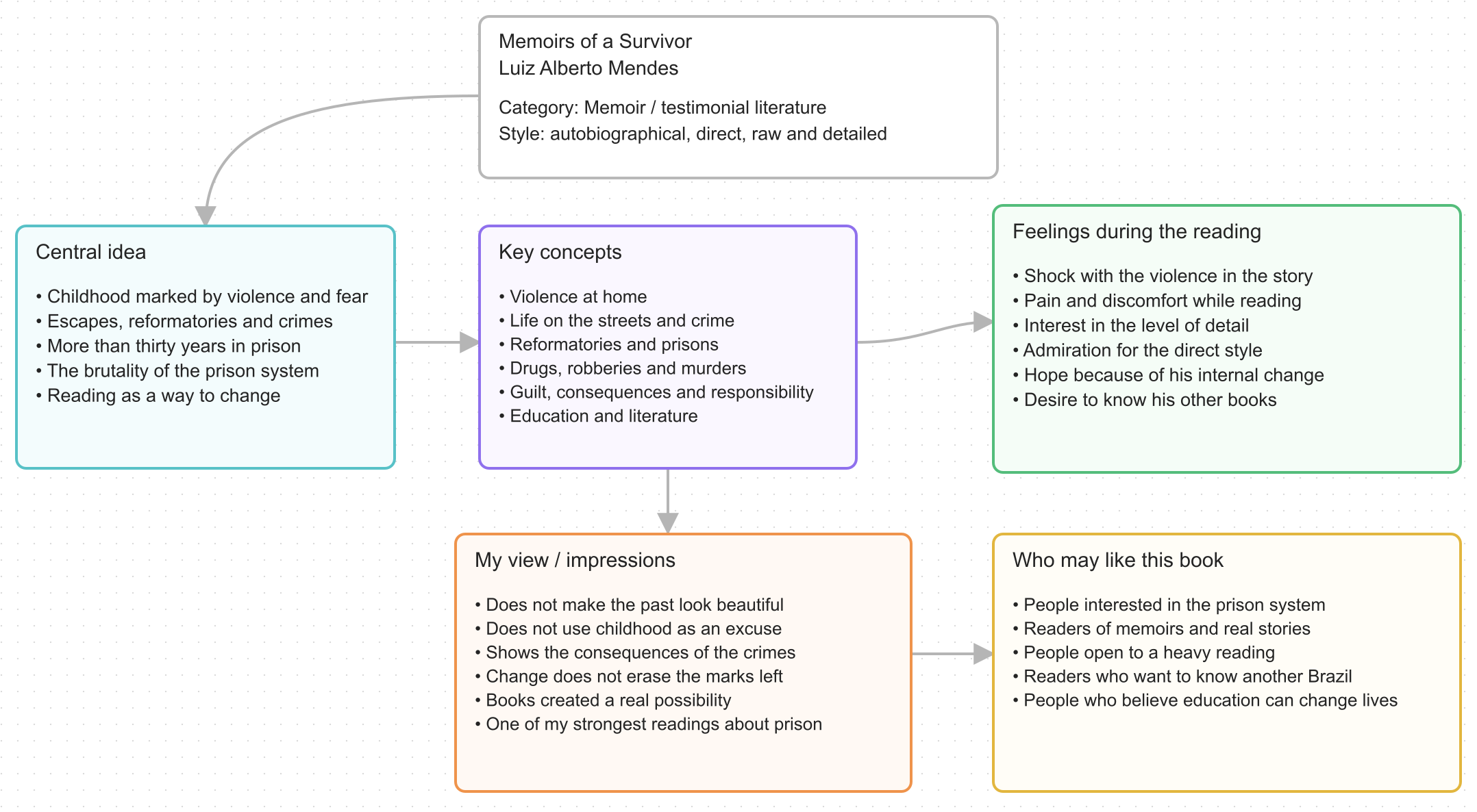
The book tells his life story with many details, from his childhood to the years inside prison. He talks about the violence he lived at home, the times he ran away, the first thefts, the crimes becoming bigger and his many times in reformatories and prisons. It is not a light reading and in many moments it is even difficult to continue, mainly because of the direct way he talks about murders, robberies, drugs, fear and the violence that was part of that world. But the parts I found more cruel were the tortures he suffered in prison.
I really liked the writing style. It is simple and direct, but also very human. It does not feel like he is trying to justify himself or transform his own story into something beautiful. He tells what he did, shows the consequences and also makes clear that the place where he grew up had an influence, but he does not use this as an excuse.
After I finished the book, I searched more about him. Luiz Alberto Mendes was born in São Paulo in 1952 and spent more than thirty years in prison. He started reading in prison and it was there that his relation with books changed everything. He studied, passed the entrance exam for Law at PUC-SP and taught other prisoners. Memoirs of a Survivor was written by hand inside prison and published in 2001, while he was still serving his sentence. The story about how the manuscript arrived at Companhia das Letras is also very good, with help from Fernando Bonassi and Dr. Drauzio Varella.
It is impossible not to feel happy while following his internal change at the end. A man who lived as a criminal, killer and armed robber starts wanting to be an honest citizen. He leaves the drugs and the contact with crime and makes a complete change in his existence. Books clearly had a fundamental role in this. They did not erase the past or the marks he left on other people and on himself, but they opened a possibility that maybe did not exist before.
After leaving prison, he wrote other books, worked as a columnist for Trip magazine and also gave reading and writing workshops in prisons. He died in 2020, at 68 years old. Now I want to read Às Cegas and Confissões de um Homem Livre, also written by him.
It is a hard and heavy book. But it is a real story. It gives hope to people who are in a similar situation and want to change, even when it seems too late.