Saving the Fire, by Itamar Vieira Junior
- March 17, 2026
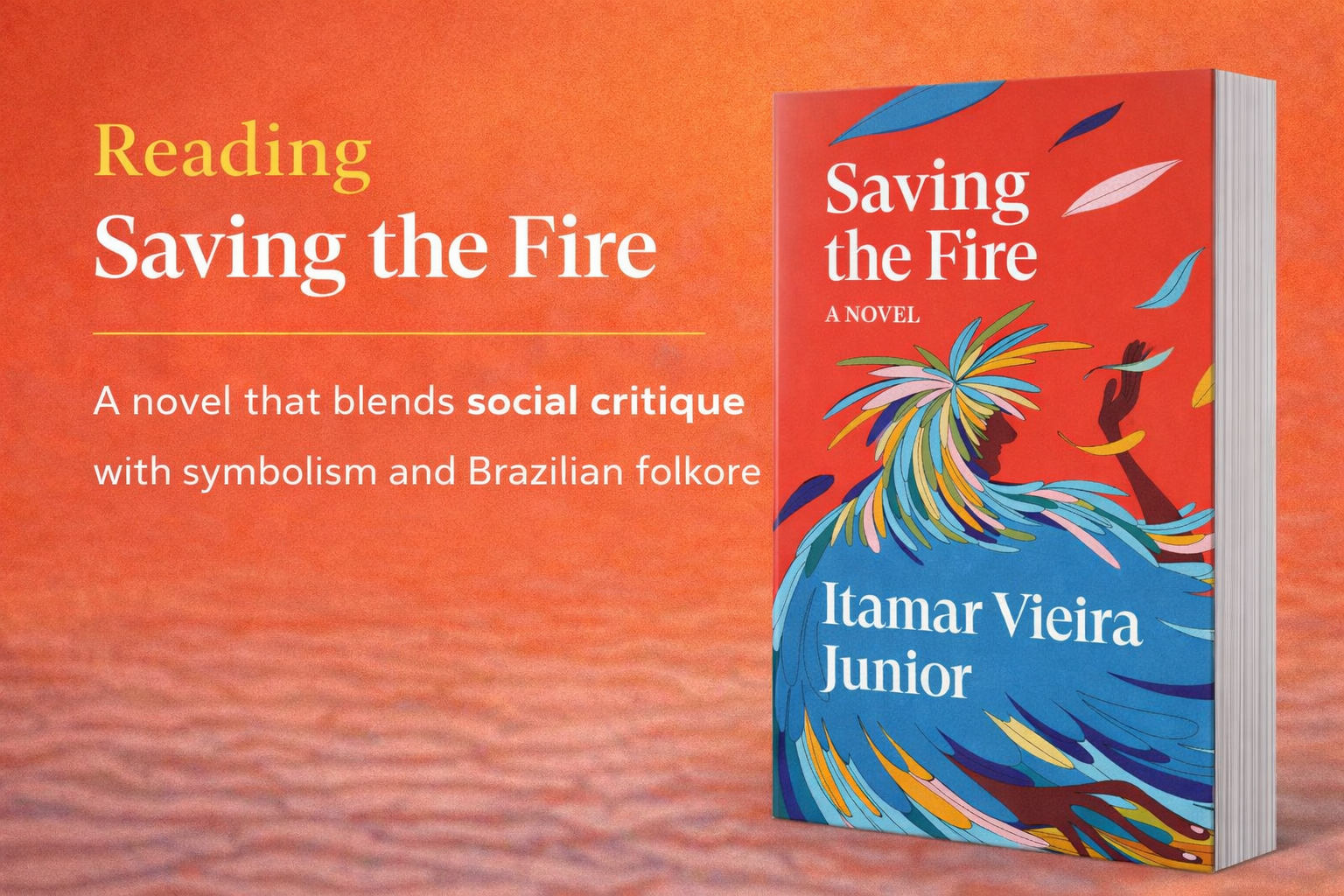
I just finished another good book, thanks Jéssica for the recommendation. This time Saving the Fire by the well known brazilian author Itamar Vieira Junior. The book goes beyond just a family drama, it talks about family, conflicts, complicated feelings, but at the same time it touches topics that feels very structural in Brazil, like religion, the role of the church in people lifes, the relation with land and work, that direct dependence of nature where there is not much space to romanticize, it is more about survival, what sustain and also limit people.
And the setting is not just a beautiful background, it really has weight in the story, it affects decisions, the way people live, everything happens near the Paraguassu river, in a place where agriculture defines the rhythm of life, and you can feel that all the time, the environment is very well described.
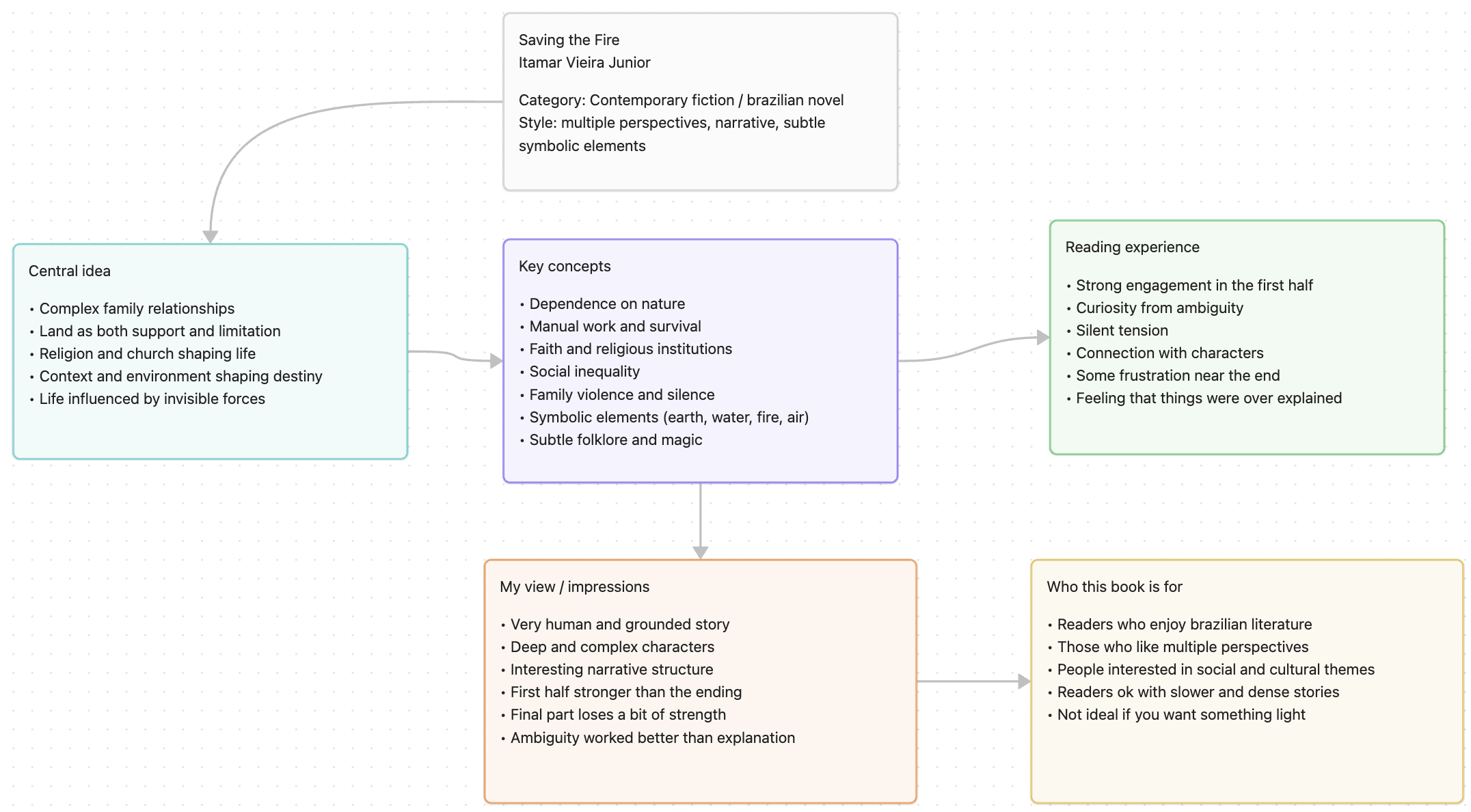
The way the author builds the characters is also very interesting, there is no character you can easily label, everyone has contradictions, silences, hard choices, and the structure of the book helps with that, since the narrative changes perspectives, sometimes the stories connect, sometimes they complete each other, and sometimes even contradict, which gives this feeling that the truth is never in only one place.
Moisés starts the story bringing this first view of the family, the father, the sisters, and his own path that leads him to a monastery, and this already brings the religion layer that crosses everything, then comes Luzia, that for me is a very strong character, someone who does not fit what people expect and still goes on, kind of by force, and then Maria, that carries this idea of displacement, leaving physically but still somehow connected to the same reality that shaped who she is.
Another thing I really liked is how the book works symbolic elements in a very natural way, especially the presence of the four elements, earth, water, fire and air, they appear kind of spread in the narrative without explanation, and together with that there is a layer that reminds brazilian folklore, a kind of subtle magic, not fantasy exactly, but also not totally rational, and it works very well.
Until the middle of the book I was really into it, mainly because some things stay open, there are heavy topics like abuse, motherhood, belonging, but they are suggested, not explained, and this creates space for the reader to think and interpret, and for me this is one of the best parts of reading.
But at some point this changes, things start to be explained more directly, like the book wants to answer everything, and in this movement it loses a bit of the strength that was coming from what was not said, from that silent tension that was being built.
The first half pulls you in very easily, but from the middle to the end it feels like the book loses a bit the direction, like it needs to explain too much or close things that did not need, it does not ruin the book, but it really depends on each person experience.
It is a very well written book, both because of the characters and the environment and also the story itself, in the end it was a good reading, with parts I liked more than others, but still worth the time.